
Archive for the 'Flickr Commons' Category

3,000,000 views on Flickr Commons!

Archaeological excavation in 1891 of a Stone Age settlement in a cave at the island of Stora Karlsö in the Baltic Sea. Photo: Hjalmar Stolpe

Archaeological excavation in 1891 of a Stone Age settlement in a cave at the island of Stora Karlsö in the Baltic Sea. Photo: Hjalmar Stolpe

We are proud to tell that the photographs of the Swedish National Heritage Board on Flickr Commons now have been viewed more than three million times. This striking number was reached and passed this week and is surely worthy of some attention.

Our participation on The Commons on Flickr has allowed so many people from all over the world to view, use and interact on the images we show as samples from our collections. So far, we have created 22 sets with different kinds of images from Sweden and other European countries and lately also with photos of old drawings, watercolours and prints. Helpful and clever members of the Flickr community have in comments provided new and useful information to 10 % of the images (which we have added to the information in our photo database online, Kulturmiljöbild). It’s always very encouraging to read all the kind and cheerful approval of the images and to view the many comparative photographs that have been posted.

A big ‘Thank You’ to all you viewers and Flickr members who have taken your time to view and interact on our photostream on Flickr Commons since the start in March 2009! We are so pleased to share the Swedish cultural heritage with you. :)

Crossing between Götgatan and  Ringvägen streets at Skanstull in the southern part of Stockholm city. Photo: Fredrik Bruno, 1943

Crossing between Götgatan and Ringvägen streets at Skanstull in the southern part of Stockholm city. Photo: Fredrik Bruno, 1943

Identified by a Flickr community member: The church of St-Jean in Fribourg, at Planche-Supérieure, Fribourg, Switzerland. Photo: Berit Wallenberg, 1936

Identified by a Flickr community member: The church of St-Jean in Fribourg, at Planche-Supérieure, Fribourg, Switzerland. Photo: Berit Wallenberg, 1936

Drawings, watercolours, prints – a new set on Flickr Commons

Country people in Småland. Watercoloured stipple engraving from 1780-1790 by Fredrik Erik Martin made after original by Pehr Hilleström. Photo: Jan Eve Olsson

Country people in Småland. Watercoloured stipple engraving from 1780-1790 by Fredrik Erik Martin made after original by Pehr Hilleström. Photo: Jan Eve Olsson

After nearly four rewarding years on Flickr Commons with more than 1100 uploaded photographs will the Swedish National Heritage Board now show some samples of another kind of images, in a new picture set called “Drawings, watercolours, prints”.

The Library of the Swedish National Heritage Board (Vitterhetsakademiens bibliotek) and the Board’s public archives hold thousands of drawings, watercolours and prints, some dated back to the 18th century, or even older. Some of these images have been photographed over the years to be displayed in the Board’s photo database online Kulturmiljöbild, and a choice of these will be presented on Flickr Commons, starting today.

View of Uppsala, Sweden. Watercoloured drawing by Elias Martin, from 1780-1790. Photo: Jan Eve Olsson

View of Uppsala, Sweden. Watercoloured drawing by Elias Martin, from 1780-1790. Photo: Jan Eve Olsson

The set will include watercolours and coloured prints from the end of the 18th century, showing folkloristic scenes and environments from different parts of Sweden. They are created by the Swedish painters and graphic artists Elias Martin (1739-1818), his brother Johan Fredrik Martin, and others. These images are from the Library’s Rosenhane Collection, derived from the collector Schering Rosenhane (1754-1812).

From the Rosenhane Collection will also appear some images illustrating a naval battle in 1789, south of the island of Öland in the Baltic Sea. They are made by the graphic artist Johan Petter Cumelin (1764-1820).

Inside of Visby city wall with the northern city gate (Norderport) and the "Coining House". Pencil-drawing by Per Arvid Säve, from 1850. Photo: Lars Kennerstedt

Inside of Visby city wall with the northern city gate (Norderport) and the “Coining House”. Pencil-drawing by Per Arvid Säve, from 1850. Photo: Lars Kennerstedt

The archives of the Swedish National Heritage Board will contribute to the set with drawings and watercolours showing medieval ruins and town scenes from Visby (and Hörsne parish) on the island of Gotland on the Swedish east coast. They are from the Collection of drawings, watercolours and prints, and from the Collection of P. A. Säve. They were created during the first half of the 19th century by the architect Jacob Wilhelm Gerss, the land surveyor Lars Cedergren and the scholar Per Arvid Säve.

Some photos of drawings showing a Danish siege in 1502 of the Swedish fortresses of Old Älvsborg and Öresten will also be part of the set. The drawings are made by the German soldier of fortune Paul Dolnstein, who participated in the Danish army at the siege. The original drawings are probably kept in the State Archives of Weimar in Germany.

We hope you’ll enjoy this historical image material – welcome to view and share it on Flickr Commons!


Flickr Commons – 5 years celebration!

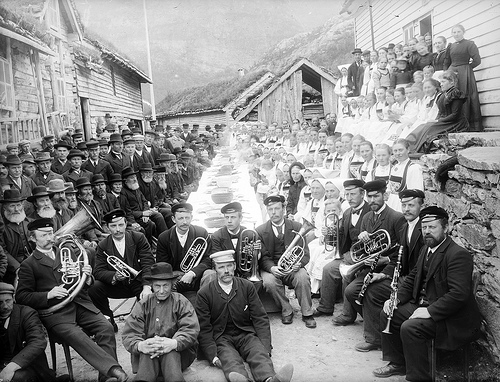
Celebrations, Flatekval, 1898. From Fylkesarkivet i Sogn og Fjordane on Flickr Commons

Celebrations, Flatekval, 1898. A popular image from Fylkesarkivet i Sogn og Fjordane on Flickr Commons. Photo: unknown

Celebrations, Flatekval, 1898. A popular image from Fylkesarkivet i Sogn og Fjordane on Flickr Commons. Photo: unknown

Five years ago, on the 16th of January, 2008 The Commons was launched as a part of  Flickr, the international website for photo sharing with millions of viewers and users. The initiator of The Commons was the Library of Congress in the U.S.A., in collaboration with Flickr. Since then, more than 250 000 beautiful, interesting and amazing images have been uploaded to The Commons.

56 cultural heritage institutions from all over the world are today showing and sharing parts of their historical photo collections on Flickr Commons. The viewers are invited to help describe the photographs, all labelled “No known copyright restrictions” and free to download and use for different purposes.
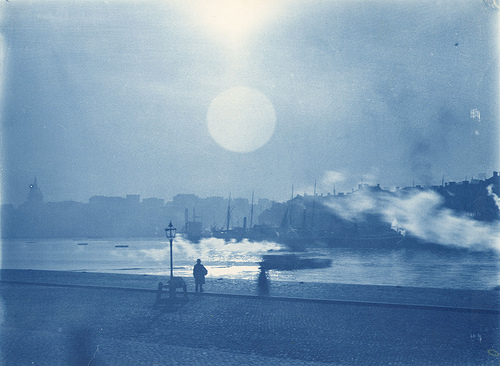
Cyanotype from Stockholm, Sweden, 1901. Photo: Carl Curman

Cyanotype from Stockholm, Sweden, 1901. Most viewed photo from the Swedish National Heritage Board on Flickr Commons. Photo: Carl Curman

Since the Swedish National Heritage Board joined in March 2009, our uploaded photos (today more than 1 100) have been largely viewed, commented on and used, and about 9 % of them have had valuable information added in comments by Flickr members. To be part of The Commons is really rewarding in many ways – not to mention all the joy it brings!

To celebrate the 5th anniversary of The Commons on Flickr, the Library of Congress has created four picture galleries – Flickr Commons Favorites 1, 2, 3, 4 – with images chosen among the most popular and interesting on The Commons.

Happy 5th Birthday Flickr Commons!
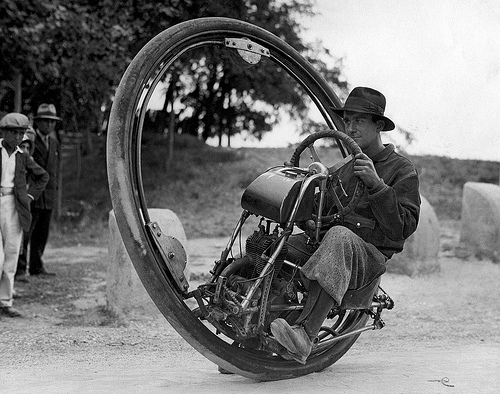
One wheel motor cycle. Photo from Nationaal Archief on Flickr Commons.

One wheel motor cycle. A popular photo from Nationaal Archief on Flickr Commons. Photo: unknown


Ministrarna visar upp Europeana

Europeana är platsen där du kan dyka ner i hela Europas kulturarv. Och det var just det som många av Europas kulturministrar och andra företrädare gjorde under ett event i Bryssel på Europadagen den 9 maj. De hade fått välja ut ett favoritföremål från sitt land som finns presenterat i Europeana och sedan berätta om detta.

Sverige hade valt en bild av Carl Curman, en Stockholmsvy tagen en vinterdag 1900. Bilden finns så väl i i Europeana som på Flickr Commons där det är den sven­ska bild som är mest kom­menterad. Tusen­tals män­niskor runt om i världen har lovor­dat  bildens skön­het.

Att valet föll på just denna bild förklaras i Sveriges blogginlägg :
bilden, som rep­re­sen­tant för det sven­ska innehål­let i Euro­peana visar hur använ­dar­nas efter­frå­gan och intresse kan och bör styra pri­or­i­teringarna av vad som ska dig­i­talis­eras och dig­i­talt till­gäng­göras av kulturarvet.(…) Är det bild­kom­po­si­tio­nen som fascinerar eller den vackra blå fär­gen som till­ta­lar eller är det bara det his­nande his­toriska per­spek­tivet att den visar något som verk­li­gen fanns för över 100 år sedan? Det är svårt att svara på, det räcker kanske med att kon­stat­era att den i sin enkel­het är ett vardagligt mästerverk.

Läs mer om vilka föremål som utvalts av de andra länderna.

Om Europeana

I den stora europeiska databasen Europeana finns information om många miljoner digitala objekt med syftet att tillgängliggöra Europas kulturella och vetenskapliga arv för alla i ett virtuellt bibliotek. Europeana är initierat av den europeiska kommissionen och EU:s medlemsländer. Riksantikvarieämbetet deltar aktivt för att öka mängden information i Europeana liksom att öka kännedom om den europeiska kulturarvsportalen.

Berit Wallenberg on Flickr Commons


Berit Wallenberg and archaeologists Söderberg and Althin at an excavation in Nälsta, Uppland, Sweden, in May 1930. Photo: Unknown

Berit Wallenberg (1902–1995) was a Swedish archaeologist and art historian. She began photographing as a teenager, and brought her camera on the many travels she made in Sweden and abroad, often on her own and under modest conditions.

She devoted her life to studies of art history, architecture and archaeology, and she used her camera for documentation. Still, many of the photos show other people, family members, fellow students and friends.


The Town Hall in Magdeburg, Germany, in June 1927. Photo: Berit Wallenberg

Most of the photos in the collection on Flickr Commons are from the period 1920-1937, taken at home in Sweden or on travels in Sweden and in ten other European countries: Italy, Belgium, France, Germany, the Netherlands, Switzerland, United Kingdom (England), Norway, Denmark and Iceland.

Berit Wallenberg was born into the influential Wallenberg family with bankers, industrialists, politicians and diplomats. Two photos from Sweden show her cousin’s son Raoul Wallenberg (1912-1947). Read more about him and see the photos in an earlier post on this blog.


Boy in a courtyard in Ystad, Skåne, Sweden, in July 1930. Photo: Berit Wallenberg

The entire Berit Wallenberg photo collection consists of more than 25 000 photos. About 5000 are today digitized in the Swedish National Heritage Board’s photo database online, thanks to financial contribution from the Berit Wallenberg Foundation.

We wish you all very welcome to Flickr Commons to meet Berit Wallenberg in Sweden and to follow her on her travels around Western Europe in the 1920s and 1930s.


Women in Montignac, France, in August 1937. Photo: Berit Wallenberg

>> Anna Boman works with Flickr Commons at the Swedish National Heritage Board

Three years on Flickr Commons

Remix Photo by Maja Larsson (CC by-nc-sa). Original photos by unknown photographer (Swedish National Heritage Board) and by Dolan Halbrook. (Click on the photo above to view the photo on Flickr, with links to the originals.)

On March 17th, the Swedish National Heritage Board celebrates three rewarding and exciting years on The Commons on Flickr, showing and sharing photos with no known copyright restrictions from our collections.

Our presence on The Commons has largely responded to the expectations we had in the beginning. Here is what we wrote on this blog on March 17th 2009.

What happened since?

Let the facts speak:

  • More than 1 980 000 views on our account on Flickr Commons.
  • More than 3 750 Flickr contacts, from more than 70 countries worldwide.
  • A clear effect of more visitors to our photo database Kulturmiljöbild through the persistent links.
  • 9 % of the photos we show on Flickr Commons have been provided with new information, thanks to attentive and devoted Flickr Community members. This user generated knowledge has helped to improve the information in our photo database.
  • The photos have been commented on, tagged, shown in groups and galleries on Flickr and marked as favourites. They have been used in media, on websites and blogs, and spread through social media. They have also served for fun and creativity being remixed.

Slottsgatan Street in Malmö, Skåne, Sweden. The street was identified by a Flickr member who also posted a recent comparative photo in a comment. Photo: Unknown (Click on the photo above to view the photo on Flickr Commons, with comments.)


Gustaf, Carin and Lilly in Järvsö, Hälsingland, Sweden. From our latest collection with colour photos by Fredrik Bruno, from the 1940s in Sweden and Norway.

Winter in Humlegården park in Stockholm, Sweden. Photo: Carl Curman

Some gratifying examples of media effects:

A big and warm Thank You to all you who have made our Flickr Commons experience so successful and fun! See you on The Commons! :)

One of Sweden’s oldest rune stones in Krogsta, Uppland. Photo: Erik Brate

>> Anna Boman works with Flickr Commons at the Swedish National Heritage Board

Raoul Wallenberg – two student photographs


Raoul Wallenberg as a senior high school graduate in May 1930, together with his mother Maj von Dardel. Photo: Berit Wallenberg

The 17th of January 2012 was the start of the Raoul Wallenberg Year, celebrated in memory of the Swedish businessman, architect and diplomat, born in Stockholm on August 4th, 1912. Raoul Wallenberg saved the lives of thousands of Jewish Hungarians during his diplomatic service at the Swedish Legation in Budapest in the last period of the Second World War. On January 17th, 1945, Raoul was arrested by the Soviet military and disappeared for ever from the Western world. He was imprisoned in Moscow, where he died in 1947, according to official Soviet sources.

The Swedish National Heritage Board keeps in it’s holdings a collection of photographs by the Swedish archaeologist and art historian Berit Wallenberg, a ten years older female relative of Raoul. The photograph above was taken by Berit at Raoul’s graduation day on May 13th, 1930 at Nya Elementar Senior High School in Stockholm. By his side stands his mother Maj, remarried von Dardel in 1918. Raoul’s father Raoul Oscar Wallenberg deceased three months before he was born.

The second of the two photographs of Raoul in Berit Wallenberg’s collection shows Raoul in a group of fellow students at the graduation day.


Raoul Wallenberg third student to the right in the upper row. Photo: Berit Wallenberg

The photographs by Berit Wallenberg, from Sweden and Europe in the 1920s and 1930s, will be the next photo collection to be shown on the Swedish National Heritage Board’s page on Flickr Commons, starting later this spring. More about it to come…

Read more about the Raoul Wallenberg Year 2012 at the home page of the Government Offices of Sweden.

Kulturarvsarbete på samhällets villkor – med hjälp av Yahoo

Last minutes of coding
Hack4Europe Foto: Henrik Löwenhamn, Riksantikvarieämbetet (CC BY)

Det här inlägget är ett svar på Håkan Lindgrens debattartikel i GP.
En nedkortad variant av detta svar publiceras även i samma tidning.

Den omfattande mängd information som förvaltas av landets arkiv, bibliotek och museer är en nästintill outsinlig källa för att bygga kunskap och ge upplevelser om människors liv och verksamhet, igår såväl som idag. När informationen digitaliseras ökar tillgängligheten och användbarheten dramatiskt. Men det förutsätter att digitaliseringsarbetet drivs samordnat och efter tydliga riktlinjer. Därför har regeringen beslutat att inrätta ett samordningssekretariat för digitaliseringen av kulturarvet. Sekretariatet börjar sin verksamhet den 1 september i år. Jag har fått förtroendet att leda det.

På det seminarium på .SE, som Håkan Lindgren refererar till i sin debattartikel i GP den 10 augusti, framhöll jag vikten av att skilja på information och kunskap. Information är byggstenar i kunskapsprocesser men kunskap är alltid resultatet av en enskild individs lärprocess. Rätt presenterad och strukturerad kan den information som finns i samlingar av alla slag och den kunskap som finns hos institutioner och individer lättare bli till kunskap hos andra.

Att myndigheter och offentliga institutioner målmedvetet ska arbeta för att den information de förvaltar ska användas för att skapa positiva effekter i samhället är för mig en självklarhet, men att därmed säga att kunskap som inte leder till tillväxt inte är viktig är mig helt främmande. Men jag tror att kunskap så gott som alltid skapar tillväxt i den breda bemärkelsen – ekonomisk, social, kulturell, personlig med mera – som jag gav uttryck för på seminariet.

Så många som möjligt

Det kollektiva minne som förvaltas av minnesinstitutionerna kan utnyttjas så mycket mer än vad det gör idag och det är ett uppdrag och ansvar för många fler än minnesinstitutionernas personal och forskare att delta i det arbetet. Informationen behövs i en bred samhällelig kontext, långt vidare än inom ett ofta alltför avgränsat kulturområde. Men ska vi nå en ökad och bredare användning måste det vara möjligt och intressant för så många som möjligt att delta i arbetet. Det är ett av skälen till vikten av öppen data. Och det var därför jag visade exemplet med den nyutvecklade appen för ”nu-och-då-bilder”, sannerligen inte för att ”museerna ska vara förbannat tacksamma för att någon vill rota igenom deras samlingar efter något som de hoppas tjäna några spänn på.”

Appen var, när jag visade den, ett färskt exempel på ett av resultaten från en tävling som i samverkan mellan Europeana och nationella organisatörer i början av juni hölls i Stockolm, Barcelona, Poznan och London. Under ett dygn byggde inbjudna IT-utvecklare koncept till appar på de ca 3 miljoner av Europeanas 19 miljoner poster som är öppna och helt fria att använda. Resultatet var imponerande och visar på potentialen att arbeta tillsammans med kreativa och kunniga utvecklare som till vardags inte jobbar med kulturarvsfrågor. Just fotoappen som jag visade är dessutom ett exempel på hur användare kan delta i arbetet med att samla in ny information och hjälpa till med att ge underlag för kvalitetshöjning av information i minnesinstitutionernas databaser.

Att använda kommersiella gratistjänster för att lagra vårt kollektiva minne tror jag är en främmande tanke för alla verksamma inom kulturarvsområdet. Men att kommunicera informationen på flitigt besökta webbplatser är en alldeles utmärkt idé. Att lägga ut, inte lagra, delar av samlingarna på till exempel Flickr Commons, leder till kontakt och dialog med långt flera besökare än vad någon av världens minnesinstitutioner lyckats nå med hjälp av sina egna ofta dyrt utvecklade webbtjänster. Dessutom drar bildvisningar på Flickr Commons trafik till institutionernas egna databaser och webbplatser. På Riksantikvarieämbetet har vi kunnat konstatera att ingen annan av de satsningar vi gjort för att nå ut med vår information har gett så goda resultat i förhållande till de blygsamma resurser vi avsatt.

Den fantastiska hjälp vi fått av användare på Flickr Commons världen över, med att identifiera för oss okända motiv och på annat sätt höja kvaliteten i information är bara ett av de positiva resultat som det här arbetet fört med sig. Det som användarna bidrar med fångar vi upp och lagrar på myndigheten. Skulle Yahoo lägga ner tjänsten är det tråkigt, men skulle inte leda till att vi förlorar information eller att stora nedlagda resurser går till spillo eftersom vi inte behövt satsa några sådana och de hittills skördade effekterna finns kvar.

Att på ett kostnadseffektivt sätt vara där användarna är, genom att vara närvarande på någon eller några av de kommersiella gratisplattformarna, är ett väl motiverat arbetssätt för de myndigheter och institutioner – som finansierade med allmänna medel – förvaltar vårt gemensamma kulturarv.

Långsiktigt bevarande

Jag delar Håkan Lindgrens uppfattning att en hållbar långsiktig lagring av digitaliserad eller digitalt född information är en central fråga i det fortsatta arbetet. Men att arbetet idag sker aningslöst och utan tanke på val av beständiga format, genomtänkta metadata med mera håller jag inte med om. Riksarkivet tar sedan 1970 emot och bevarar handlingar i digital form från statliga myndigheter.

Kungliga Biblioteket tar på motsvarande sätt emot och bevarar publicerat material i digital form. Svenska minnesinstitutioner är aktiva inom olika forsknings- och utvecklingsprojekt, såväl nationellt som internationellt. Men även om mycket görs inom detta arbetsfält så återstår många frågor att lösa. Därför är det långsiktiga bevarandet tydligt utpekat i regeringens uppdrag till Riksarkivet att inrätta ett samordningssekretariat för digitalisering, digitalt bevarande och digital förmedling av kulturarvet.

Samordningssekretariatet kommer att vara en liten avdelning på Riksarkivet. Ett lyckat resultat bygger därför på en bred samverkan inom kulturaravsområdet och som en garant för detta finns en styrgrupp med representanter från de myndigheter och institutioner som medverkar till finansieringen av sekretariatet. Här ingår Riksarkivet, Kungliga Biblioteket, Riksantikvarieämbetet representanter från centralmuseerna.

Men det räcker inte med en väl förankrad och samordnad verksamhet inom kulturarvsområdet. Ett framgångsrikt kulturarvsarbete är alltid väl integrerat i andra breda samhällsfrågor och därför måste samordningssekretariatet söka ett gränsöverskridande samarbete med övriga samhällssektorer, offentliga så väl som privata. Arbetet kommer att präglas av öppenhet och genomsiktlighet. Jag ser fram mot fortsatta samtal och debatter med många infallsvinklar och deltagare.

Tillägg: Även Pelle Snickars från Kungliga Biblioteket har svarat Håkan Lindgren.


Rolf Källman är chef för Informationsavdelningen på Riksantikvarieämbetet och från och med 1 september leder han  Samordningssekretariatet för digitalisering på Riksarkivet.

Fredrik Bruno on Flickr Commons


Skanstull in Stockholm, Sweden. Photo: Fredrik Bruno, 1943

The 1940:s in Sweden and Norway – in colour! The Swedish National Heritage Board presents a new collection on Flickr Commons with photos by Fredrik Daniel Bruno (1882-1971), who was a town engineer in Hudiksvall in the northern part of central Sweden. He was also a diligent amateur photographer.

Fredrik Bruno took colour photos on travels around Sweden and Norway in the 1940:s and early 1950s, loading his camera with either Kodachrome or Agfacolor diapositive film. Most of the travels in Sweden were probably official and related to his profession. His field of interest as a town engineer is well reflected in the frequent motifs of towns and cities, buildings and public parks. Sweden’s two largest cities Stockholm, the capital, and Göteborg (Gothenburg) are well represented. Some photos are from the Swedish countryside and some are from Norway. The Norwegian photos, all from 1948, show towns and landscapes. They seem to be from a private holiday trip.


Röros, Norway. Photo: Fredrik Bruno, 1948

The new collection “Fredrik Bruno” is arranged in two sets, “Sweden” and “Norway”. Most of the photos are from the 1940:s, a few are from the early 1950:s.

Some of the photos from Sweden will be linked in the description field to a recent photo in our photo database, showing exactly the same view in 2010-2011. These photos are taken within a project at the Swedish National Heritage Board, where selected views catched by Fredrik Bruno have been photographed anew to illustrate change (or lack of change) over time, mostly in the urban environment.

Join us on a colourful trip around Sweden and Norway! Hope you’ll enjoy – we really look forward to share these photos with you, and we hope to see comparative photos in the comments. :)


Stigbergskajen quay in Göteborg (Gothenburg), Sweden. Photo: Fredrik Bruno, 1944

>> Anna Boman works with Flickr Commons at the Swedish National Heritage Board

The 1940s in colour


Uppsala, Sweden, 1943. Photo: Fredrik Bruno

A pink parasol in the Swedish town of Uppsala in 1943…cyclists on a street in Härnösand in 1944… a restaurant in Gothenburg in 1944… people viewing Kjølingefjell mountain in Norway from afar…

We are preparing for a new collection on the Flickr Commons page of the Swedish National Heritage Board, to appear in August 2011. Fredrik Bruno, a Swedish town engineer from Hudiksvall, took a lot of colour diapositives in the 1940s while travelling in Sweden and Norway. Most photos are from a number of Swedish towns, some are from the Swedish countryside and some from Norway.

Enjoy some samples from the forthcoming collection!


Härnösand, Sweden, 1944. Photo: Fredrik Bruno


Henriksberg Restaurant, Gothenburg/Göteborg, Sweden, 1944. Photo: Fredrik Bruno


Kjølingefjell mountain, Norway, 1948. Photo: Fredrik Bruno

>> Anna Boman is working with Flickr Commons at the Swedish National Heritage Board